

| Revision | Adoption Date |
|---|---|
| Original | February 25, 1999 |
| Revision 1 | September 15, 2004 |
| Revision 2 | December 5, 2016 |
| Revision 3 | September 24, 2018 |
The purpose of these Community Design Guidelines (the “Guidelines”) is to create and preserve a consistent community character for The Bridges at Rancho Santa Fe, by establishing standards which integrate architectural character, site planning and landscape design in order to enhance visual order, privacy and compatibility. These Guidelines are intended to provide generally broad parameters to accommodate creativity, combined with some clear prohibitions and requirements to maintain high standards of quality. It is the responsibility of the Design Review Committee, defined below, to exercise its best judgement in determining whether plans and specifications are consistent with the design objectives expressed in these Guidelines. These Guidelines apply to all architectural, landscaping and other amenities undertaken both by persons planning to construct a custom home, landscaping and other amenities on a homesite (collectively the “Improvements”), and by homeowners planning to modify any existing Improvements.
One of the more important aspects of the desirability and attractiveness of living in The Bridges will be the enhanced architectural and landscape character of the community.
The master developer, HCC Investors, LLC (“Declarant”) has created a method of preserving that character through formation of The Bridges Community Association (“Master Association”). The Master Association is vested with the authority to administer and enforce community design controls applicable to all improvements, as described in Article VIII of the Master Declaration of Convenants, Conditions, Restrictions and Reservation of Easements for The Bridges (the “Master Declaration”), which is recorded in the Official Records of San Diego County, California.
The capitalized terms used in these Guidelines are more fully defined in the Master Declaration, and those definitions apply to these terms. The Master Association is responsible for the review and approval of plans and specifications for all Improvements that you propose to construct or install on your homesite. The Master Association administers and enforces all design standards and rules through the Design Review Committee (“DRC” or “Committee”). The Committee is composed of three Members appointed as set out in Section 8.1 of the Master Declaration. The DRC may be contacted through the Manager of the Master Association, whose address is available from The Bridges Sales Office.
Failure to obtain the necessary approval for any Improvement from the DRC may constitute a violation of the Master Declaration and could result in the modification or removal of the work (regardless of whether it has been completed) at the expense of the Owner. All residents have the right and the responsibility to bring to the DRC‘s attention any violations of these Guidelines to the Master Declaration.
These Guidelines, along with the provisions set forth in the Master Declaration, form the basis for evaluation of plans and specifications for all Improvements by individual Owners.
Any items or issues not addressed in the governing instruments for this community are matters left to the discretionary judgement of the DRC acting in good faith on behalf of the best interests of the community as a whole. The Master Association may at its discretion amend or supplement these Guidelines from time to time, as provided in the Master Declaration.
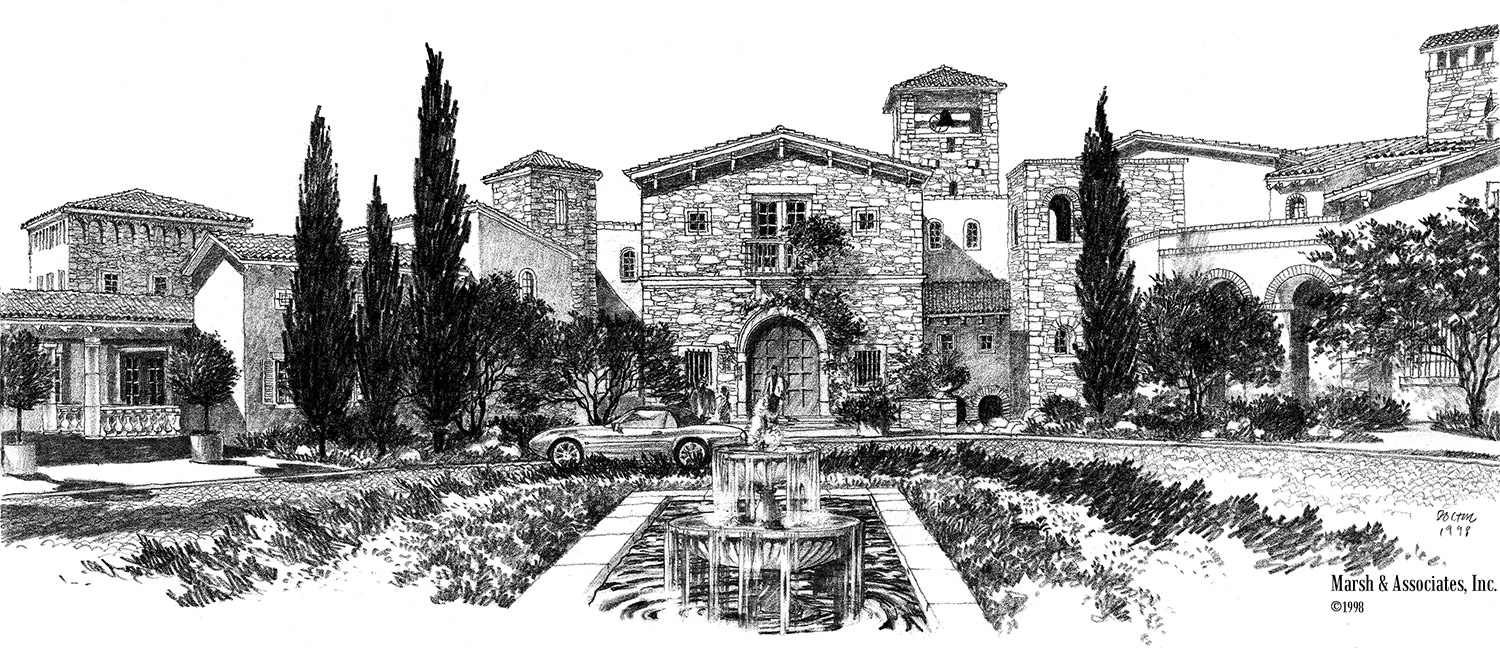
To carry out the design goals and objectives of The Bridges community, a comprehensive design review process, administered by the DRC, has been established. This design review process applies to the design and construction of your residence and all other Improvements constructed or installed on your homesite (“Improvements”).
It is imperative that an Owner retain competent professional services for the planning and design of all Improvements. Each design team must combine a thorough analysis of a particular homesite and the Owner’s special needs with the skill to translate these factors into an Improvement concept and design that is effectively conveyed to the DRC. Therefore, all plans and specifications submitted to the DRC must be prepared by or under the supervision of an Architect and a Landscape Architect licensed to practice in California. All plans in all submittals must be wet stamped and signed by the responsible professional.
When DRC approval of plans and specifications is required, the DRC may condition its approval on such changes as it deems appropriate and may require submission of additional plans and specifications or other information or materials prior to approving or disapproving plans and specifications.
The DRC’s review of plans and specifications only extends to conformance with the Master Declaration and these Guidelines. By approving plans and specifications, neither the Declarant, the Master Association, its Members and Board of Directors, nor their agents, assume liability or responsibility for the architectural or engineering design of the Improvement, or for any defect in any structure constructed from the Owner’s plans and specifications. Further, approval by the DRC of any designs or plans shall not be deemed to be a waiver of the DRC’s right to withhold approval of any similar design or plan subsequently or additionally submitted. Failure to enforce any development standards shall not constitute a waiver of such standards.
Each homesite submittal will require a non-refundable initial cash review fee of $5,000. In addition there will be a $25,000 cash construction deposit to be submitted at the Pre-Construction Conference. The deposit, or its unused balance, will be returned to you under the construction deposit release conditions described in Section VII of these Guidelines. The initial review fee must be paid prior to Preliminary Review. At the Committee’s discretion, additional review fees may be charged if the cost of such review will exceed the initial review fee.
Review fees and construction deposits for additions and alterations are described on a separate fee schedule available from the Master Association. The amount of fees and deposits may change without notice.
It is the sole responsibility of the Owner, Owner’s Architect and Owner's Builder to design and construct the Improvements in accordance with the approved plans and with all applicable governmental codes, laws, ordinances and regulations including those of the County of San Diego. In addition, certain Improvements, such as drainage and slope encroachments, will require the review and approval of the Owner or manager of the Golf Course Property, as provided in the Master Declaration.
All plans submitted must be of one sheet size, not larger than 30 inches by 42 inches.
Inspections of work in progress and issuance of Notices of Non-compliance may be made by the DRC or its designated representatives. Absence of such inspection and notification during construction does not constitute either DRC approval of the work in progress or compliance with these Guidelines.
Construction of additional Improvements to a homesite or residence, changes during construction or after completion of an approved Improvement, including landscaping and paint color modification, must be submitted to the DRC for approval prior to making such changes or additions.
Results of plan reviews will not be discussed over the telephone or in person by members of the DRC with an Owner or the Owner’s Architect. No Owner, Architect or Builder shall have the right to attend any meeting of the DRC other than Preliminary Plan review and Design Development Plan review unless specifically requested by the DRC. Any response an Owner may wish to make regarding the results of a design review must be addressed to the DRC in writing, in care of the Master Association Manager.
All packages submitted to the DRC must be submitted by an Owner of a homesite or his appointed representative, and mailed or delivered to the DRC in care of the Manager of the Master Association. The DRC will not review incomplete submissions, which will be returned to the applicant with a checklist noting the areas of deficiency. All submittals must consist of five (5) sets of prints.
The DRC has 45 days from receipt of a complete submittal from an Owner, to approve, conditionally approve or disapprove the submittal. If the DRC fails to approve, conditionally approve, or disapprove the plans submitted by the Owner within 45 days after receipt of all materials requested, such plans and specifications shall be deemed approved. No construction may begin prior to receipt of DRC approval and the Pre-Construction Conference, or the end of the 45 day period, whichever occurs first.
The Preliminary Plan shall consist of the following:
The Preliminary Plan shall be reviewed with the Owner and the Architect to discuss and resolve questions regarding building requirements or the interpretation of the Guidelines.
After Preliminary Plan approval is obtained from the DRC, the following documents are to be submitted for Design Development Plan review:
All details must be referenced on elevations.
The DRC will review the Design Development Plan described in Section E above and respond in writing with the Committee’s conditions and comments.
After Design Development Plan approval is obtained from the Committee, the following documents are to be submitted for final review:
If, in the opinion of the Committee, the submittal is a logical and direct development of the approved Design Development Plan drawings and is in compliance with these Guidelines, approval will be granted in writing.
Should the design be at substantial variance with the Design Development Plan drawings or violate any of these Guidelines, disapproval or continuance may result and a revised submittal will be required.
In the event of disapproval or continuance by the Committee of either a Preliminary, Design Development or a Final Design Plan submittal, a re- submission of plans must follow the same procedures as an original submittal.
After Final Design Plan approval, but prior to commencing construction, the Owner and Builder must meet with a representative of the Committee to review construction procedures, execute the Construction Agreement (Exhibit ‘C’), tender the construction deposit and coordinate his/her activities in The Bridges at Rancho Santa Fe.
After Owner’s receipt of Final Design Plan approval, holding of the required Pre-Construction Conference with the Committee’s representative, and satisfaction of all governmental review processes, the Owner must commence actual construction of the work pursuant to the approved plans within 90 days from the date of such DRC Final Design Review approval. If the Owner fails to begin construction of building foundations within this time period, any approval given shall be deemed revoked. The Owner must complete the construction of any Improvement on Owner’s homesite within 18 months after commencing construction thereof, except and for so long as such completion is rendered impossible or would result in great hardship to the Owner due to labor strikes, fires, national emergencies or natural calamities.
Upon completion of any residence or other Improvement and prior to move-in, the Owner must give written notice of completion to the Committee. Within 10 days of such notification, a representative of the Committee will review the residence or other Improvements for compliance. If all Improvements comply with the approved plans and these Guidelines, the Committee will issue a written Certificate of Completion to the Owner within 10 days of the final building/landscape review, constituting a final release of the Improvements, by the Committee.
If it is found that the work was not done in strict compliance with the approved plans or any portion of these Guidelines, the Committee will issue a written Notice of Non-compliance to the Owner within 10 days of the final review specifying the particulars of non- compliance. The Owner shall have 30 days from the date of Notice of Non-compliance within which to remedy the non-complying portions of his/her Improvement. If, by the end of this time period, the Owner has failed to remedy the non-compliance, the Committee may recommend and the Master Association may take action to remove the non- complying Improvements, as provided in the Master Declaration.
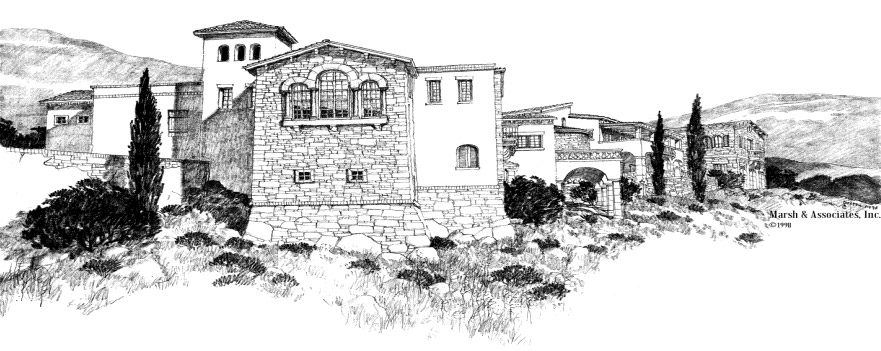
The following criteria are intended to enhance the environment and aesthetic quality of development within The Bridges at Rancho Santa Fe.
A homesite profile is available from the Declarant that indicates all building setbacks and easements. The Owner is responsible for verifying actual site conditions. The Owner shall notify the Declarant of discrepancies.
As with all golf course frontage homesites, there is an inherent risk that golf balls and the play of golf may impact these homesites or residences. The Committee strongly recommends that, during the site planning of a homesite, detailed consideration be given to the possibility of errant golf balls entering the homesite area, and particular attention should be given to the orientation of windows or other breakable surfaces of the residence. Netting, screens, excessive landscaping, or large blank walls will not be allowed. Evaluation of the proper siting, orientation, massing and setbacks should provide for maximum enjoyment with minimal adverse impact from the play of golf. Design consideration should also be given to the noise generated by golfers, golf carts, golf maintenance vehicles and lights generated by the club facilities.
Written authorization for encroachment into the slope maintenance area and for any tree removals must be obtained.
The maximum height of all Improvements shall not exceed twenty eight (28) feet unless noted otherwise on a homesite profile. The height of an Improvement is defined as the vertical distance from the lowest pre- existing grade at the building line to the highest ridge of the structure. Architectural appurtenances, such as fireplace chimneys, may exceed the height limit by four (4) feet, and are limited to a sixteen (16) square foot area in plan view.
Notwithstanding the maximum building height set forth above, the Committee may disapprove a proposed residence or other structure if, in the Committee’s sole opinion, the structure appears excessive in height when viewed from any street, private amenity, Master Common Area, or another residence, if it appears out of character with other residences, or if it would be overly prominent because of its height.
Building Pads have been developed to create smooth and gentle transitions between homesites. A maximum pad elevation modification of 18” from existing pad elevation, up or down, will be considered by the Design Review Committee, and may or may not be approved at its sole discretion. Minor grading will be required to soften engineered slopes and create a more natural and less manufactured appearance. Drainage or erosion damage that occurs due to flow from one homesite to other homesites or Master Common Areas because of changes in site conditions will be the responsibility and liability of the Owner of the homesite that caused the change in flow.
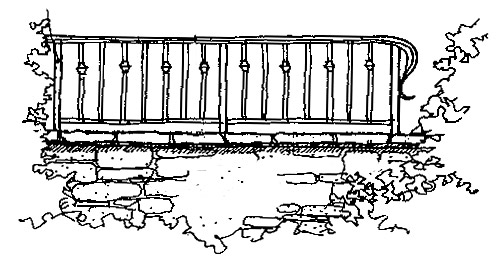
It is the intent of these Guidelines to limit and minimize physical elements that separate or enclose the homesites. To accomplish this objective, no such fences or wall enclosures are to be placed on the property line between a residence and the street in front of the homesite. Although masonry, steel and stucco elements are not prohibited, living plant materials are preferred over inert, hard materials.
Where additional guard is required, predominately transparent metal decorative fences may be permitted at rear and side yards. No fencing and/or walls of any kind will be permitted in open space easements or on slopes facing streets. In general, no fence or wall will be permitted over five (5) feet high. Pickets on decorative metal fencing must be solid bar pickets with minimum 5/8” size.
Pool enclosure fences are to be metal and are subject to design approval. Slopes away from streets may have an open metal fence that may encroach onto slopes where approved by the DRC. Walls and fencing visible from the street or golf course which detract from the attractiveness of the overall street or golf course scene will not be permitted. All fencing and site walls must slope with grade and not be stepped. Garden and freestanding walls should be a direct reflection of the architectural theme of the buildings, specifically as to materials, color, finish and detail. Retaining walls and all exposed walls must have above grade surface treatment the same as the garden walls.
The homesite Owner is encouraged to use stone faced walls whenever the walls support soil. All pre-cast stone or concrete elements must have color and finish of natural stone. Call out and note on drawings.
All walls are to be a maximum exposed height of five (5) feet, except site walls that are direct extensions of the house walls may be a maximum height of eight (8) feet. Wall pilasters and columns may be a maximum six (6) feet. In general, all exposed ends of site and garden walls should be terminated with a pilaster or thickened end. Specifically prohibited wall materials include exposed concrete block, metal panels, railroad tie, cribwall, chain link and similar materials.
No roof mounted or wall mounted heating or cooling equipment will be permitted, excluding solar equipment. All exterior heating and cooling system components must be ground mounted adjacent to the residence and hidden from view of the roadway, neighboring properties, and the golf course by construction of screen walls.
A walled trash receptacle area of hard surfacing must be set aside in the landscape area, out of community view.
All exterior lighting for identification, pools, water features and landscaping shall be subdued and indirect. Nuisance lighting and/or glare must be avoided. No direct lighting of building walls, roofs or building elements will be permitted.
All lighting must comply with the County of San Diego “Dark Sky” ordinance, and with the provisions of the Master Declaration.
No lighting for tennis or sports courts shall be permitted.
Antennae and satellite dishes are permitted in accordance with local and Federal requirements and as outlined in the Master Declaration. The location must be approved by the Design Review Committee.
All auxiliary buildings and landscape structures must be designed to be in harmony with the architectural style of the main residence and must be contained within building setbacks.
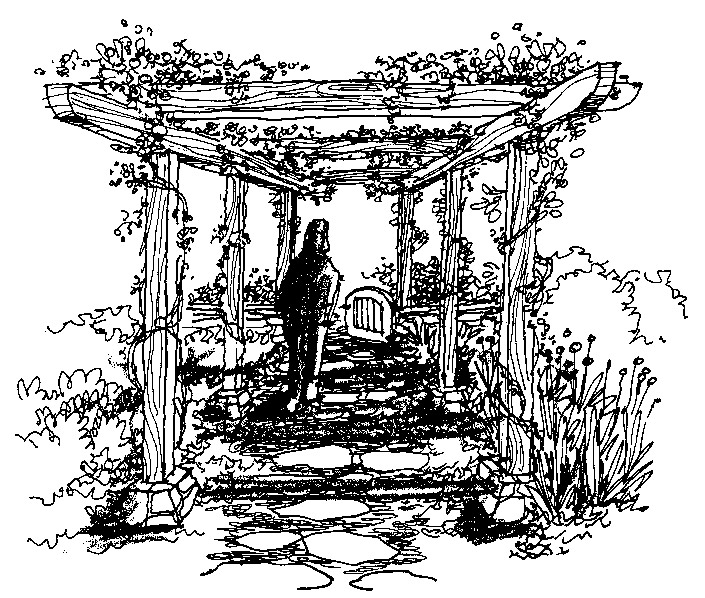
Major vertical or dense landscape construction items such as arbors, trellises, barbecue centers, boulders, equipment enclosures, etc., will not be permitted at top edges of slopes or in prominent locations seen from the golf course or street.
In general, all solar panels for heating home and/or pools shall be integrated with roof forms or preferably hidden on flat roof areas.
Under certain circumstances freestanding panels may be allowed, at the discretion of the Committee, where the panels cannot be seen from the street or golf course.
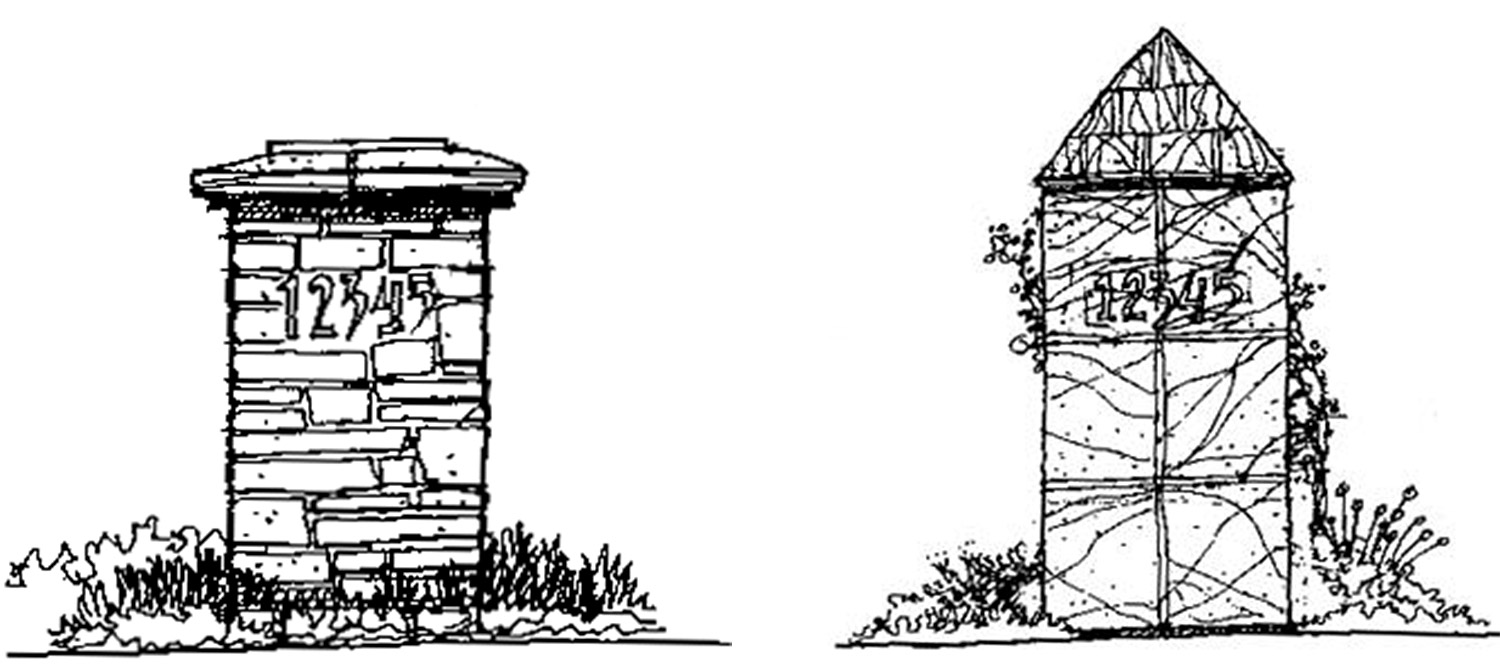
Each homesite must provide an entry monument at the driveway entrance to adequately define and identify the homesite. This monument may be a pillar, pilaster or column that directly relates to the architectural theme of the house. It must be provided with the street address of the homesite, which will be illuminated at night with uplighting. Backlit signage is not allowed. The address materials are to be tile, brass, bronze, granite or similar long-lasting traditional material. The entry monument should not be over four (4) feet in height. No top or post mounted lighting fixtures will be permitted.
Every effort should be made during the design process to preclude garage door openings which face the street. Under special circumstances, an exception may be granted by the Committee.
Garage doors must relate to the architectural theme of the house. Quality materials are required. Garage doors that are visible from the street must be architecturally significant and compatible with the architectural style of the home.
All terraces, decks and patios must be designed to be an integral part of the architecture.
All hardscape, other than stone, tile, pavers or exposed aggregate, must be aesthetically and visually divided or broken up with textural and/or color changes or patterns. Maximum distances between scorelines, sawcuts or jointing should be five (5) feet on centers, both ways, to provide human scaled areas.
All plans for remodeling or additions to approved structures are to be designed to appear as a part of the main structure, and must be submitted to the Committee for a full review process.
Entrance driveways should be located so as to minimize their visual impact on a residence. Driveways may not exceed a maximum of sixteen (16) feet wide, except at autocourt areas, and should intersect the street preferably at a right angle, but in no case at an angle less than 70 degrees. Driveways should also be located in such a way as not to interfere with drainage in the right-of-way of the street.
Only one driveway entrance off of the street will be permitted for each homesite, except that when two (2) or more homesites are legally merged for development of a single homesite, or the homesite abuts two streets and the two driveway arrangement disturbs less area than a single entrance. The Committee may, at its sole discretion, approve up to, but not exceeding, two (2) driveway entrances. Uncolored and/or smooth concrete may not be used for driveway surfaces.
Circular motorcourts may be approved on a case by case basis. In all cases, circular motorcourts must have a fountain and/or a planting area in the center.
Colored and stamped concrete, colored and exposed aggregate concrete, colored and textured concrete pavers or natural stone are approvable driveway materials. Feature strips of a different material and special aggregates in visually exposed driveway concrete will be reviewed on a case by case basis. This entrance must be identified with an enriched apron paving and a decorative entry monument. Low free standing or retaining walls, up to 42 inches in height, and gateposts or entry monument(s), up to four (4) feet may be integrated into the entrance design. No free standing driveway entrance will be permitted that is a “drive under” feature, such as beams or arches over the driveway. Driveway aprons must be flared at street edge.
Vehicular paving is not permitted within three (3) feet of building walls or two (2) feet of site walls.
Each residence must contain parking space within the homesite for at least two (2) automobiles in an enclosed garage, either attached to or detached from the main structure of the residence.
A minimum of two (2) additional exterior parking spaces must be provided to accommodate guest parking. Views of guest parking areas from adjacent homesites, streets, golf course or public spaces must be minimized by screening or the use of landscaping. Landscaped berms may also be used, but their slope and contour must blend naturally into the landscape. No exterior storage of recreational vehicles or boats will be permitted.
No guest parking is allowed within seven (7) feet of street right of way line. No more than two (2) parking spaces are permitted within the front yard setback.
Swimming pools and spas should be designed as being visually connected to the Residence through terraces, patios, walls and/or courtyards, and the visual impact must be minimized from adjacent homesites, streets and public spaces. Swimming pools and spas must be constructed according to the County of San Diego ordinances and other applicable regulations, including required fence and enclosure heights. The exposed material on a negative edge pool must be a natural material and must be dark or match the building color. No light or bright tile colors will be permitted on negative edge pools. Based on policies by the County of San Diego, pool backwash or pool draining is not allowed to be disposed in the sanitary sewer system. Due to environmental concerns, pool backwash and draining is not allowed into a ravine or other natural drainage area. All applicable regulations governing disposal of pool water must be followed.
Pool equipment must not be visible from neighboring properties and must be enclosed within a structure or by walls and a gate, or other suitable screening materials or methods.
Water features and water slides will be reviewed on a case by case basis for appropriateness.
For reasons of noise control and aesthetics, sports and tennis courts will not be allowed on any homesites, unless indicated on homesite profiles.
All exterior recreational or play equipment, such as swing sets, slides, play structures, jungle gyms and similar equipment, must meet the intent and requirements of all sections of these Guidelines, including color. This type of equipment or structures should be located in the least visible portions of the homesite and must not be visible from the golf course. In addition, every attempt to screen this equipment or structures from view of adjacent homesites should be made, including the installation of mature landscape. The height of this type of equipment shall be limited to a maximum of eight (8) feet above finished grade. All exterior recreational or play equipment requires specific approval of the Committee, prior to installation.
Basketball hoops and backboards may be installed at a residence when specifically approved in advance by the Committee. The installation of such items will be subject to stipulations imposed by the Committee based on specific review of the request. The Guidelines intent is to locate a basketball hoop and backboard in the least visible area, away from view from the streets, golf course and other public areas. Basketball hoops and backboards are not allowed in yards facing the street(s), nor on the face of a building that faces the street(s). Basketball hoops and backboards are also not allowed within fifty (50) feet of any property line adjacent to the golf course.
Backboards on a building must be clear or painted to match the house, and the top of the backboard must be kept below the top of the parapet of the wall on which it is mounted. No backboards shall be allowed on a pitched roof. Backboards mounted on a pole must either be clear, painted to match the house, or painted flat Verde green. The pole or support shall be painted black, dark brown or dark green. Poles must be removable. The Committee may require additional mature landscaping to screen any basketball hoops and backboards from adjacent homesites, streets and public areas.
The intent of this section is not to discourage decorating for holidays, but to insure a tasteful and very high standard of quality befitting The Bridges at Rancho Santa Fe. Holiday decorations should be subtle, soft, and tasteful. Decoration displays should not have a commercial appearance and should not be “over done” in brightness, size, or visibility from public spaces, common areas or the golf course. Holiday decorations will be allowed only between November 25th and January 10th. No Holiday decorations are allowed before Thanksgiving Day and all must be removed by January 10th. Decorations for other holidays may be installed no more than two weeks prior to the holiday and must be removed within two days after the holiday.
Skylights must be used with restraint. All skylights must be flat glazed with dark bronze glass and frame. Under no circumstances will skylights be permitted on roof planes facing streets.
The use of flat roofs is limited to no more than 50% of total roof area. If viewed from above, such roofs must be covered with appropriate material to match sloping roof. Roof pitches should be consistent with the architectural style of the residence.
Flat roofs, when used, should be surrounded by parapets a minimum of 10” up to a maximum of 36” above adjacent plate line. Parapets must return and end in an intersection with a building mass.
Roof materials should be compatible with the architectural style of the building, using authentic materials where possible.
Roof materials should have a matte finish to minimize glare.
The following roofing materials are specifically restricted from use:
Barbecue and food centers shall be designed in coordination with the home’s design and should be located out of view of the golf course, street, public spaces and neighbors’ lots.
Fountains and all other water features must relate to the design of the home and must be constructed of high quality, low maintenance materials. Special details, elevations, and/or photographs will be required by the Design Review Committee for review and approval.
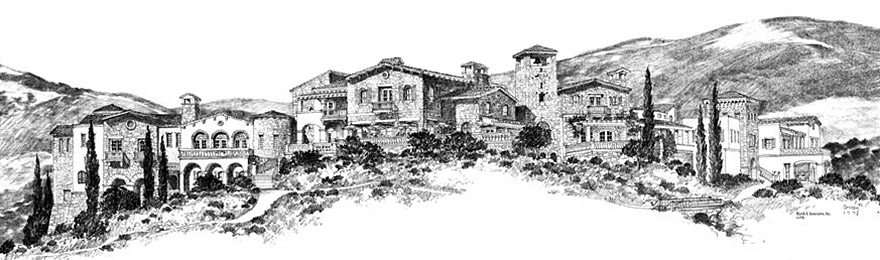
The architectural design philosophy of The Bridges at Rancho Santa Fe is intended to develop a look and feel of “timeless” architectural design. The execution of each residence must be “authentic” in character and should be such that the residence fits the homesite with sensitivity and respect for the land and its surroundings.
The vocabulary selected is based on the unique lifestyle of country/estate living. The architectural styles to be developed at The Bridges are:
Although traditional authentic architecture is encouraged in the Bridges, contemporary interpretations will be considered on a case by case basis.
The description of architectural styles and principles is not intended to restrict, but rather to assist in the identification and implementation of a strong consistent design direction and level of quality.
Sound design principles are difficult to describe and more difficult to legislate; however, these Guidelines have been outlined to encourage sound design by specific examples.
The following Architectural Criteria are required:
The following parameters are to be encouraged:
The following must be avoided:
The following pages provide additional information on details, vocabulary and architectural characteristics. Within the design vocabulary of each style there are numerous variations and possibilities for interpretation.

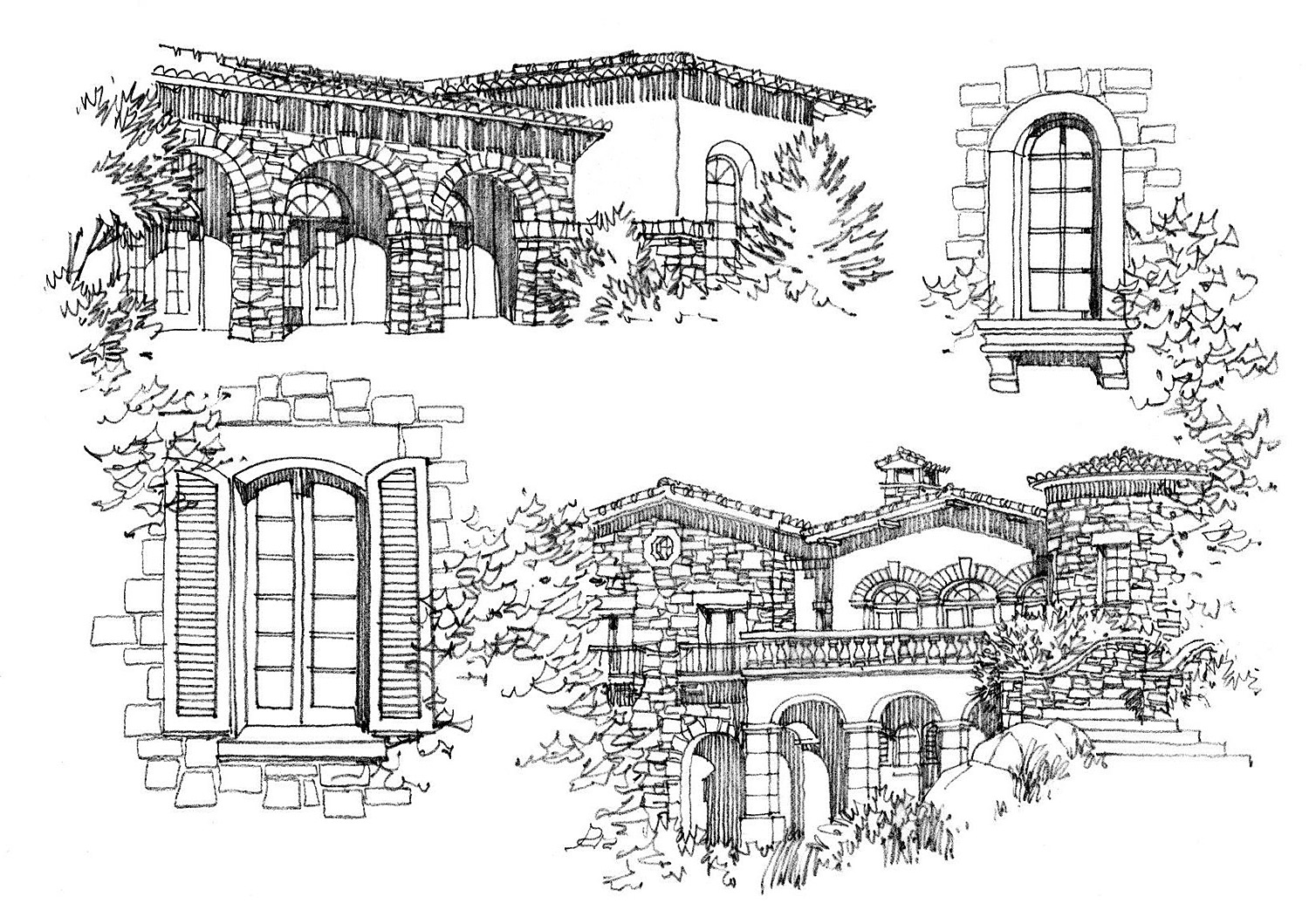
The Italian Country Style is characterized by the quaint farmhouses and hillside villages of the Tuscan Region in Italy. Simple and unpretentious, they display an elegance in design that embodies the essence of country life. Their timeless beauty lies in the integrity of their natural building materials. From the exterior, these farmhouses appear squat and strong, with classical proportions. Thick walls are typically constructed of creamy earth-tone stone or brick, and roofs are covered with “coppi”, curved clay tiles. These low- pitched rustic tile roofs reinforce simple, elegant massing. Wood windows are traditionally small and deeply inset with wood shutters and expressed sills and trim. Massive hand hewn wooden beams, window headers and facia details are common, as well as elegantly detailed ironwork. As in the Italian countryside, nature is an integral design component to the success of this rustic country style.
The mediterranean style of architecture is derived from the Villas of Andalusia in Spain. It is characterized by barrel tile roofs and simple stucco forms with a feeling of thick walls and deep set openings. This architectural style lends itself to more modern interpretations.
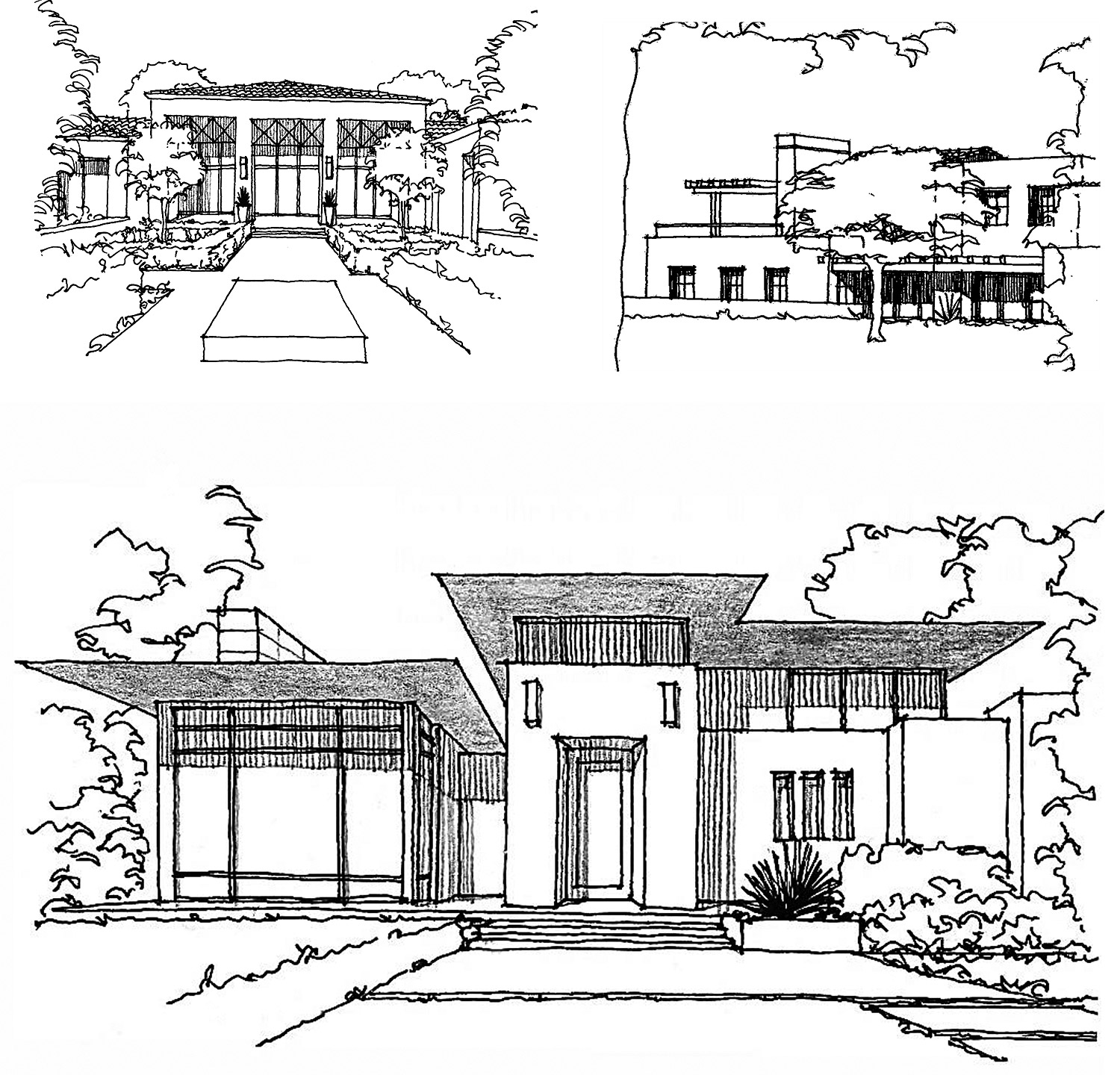
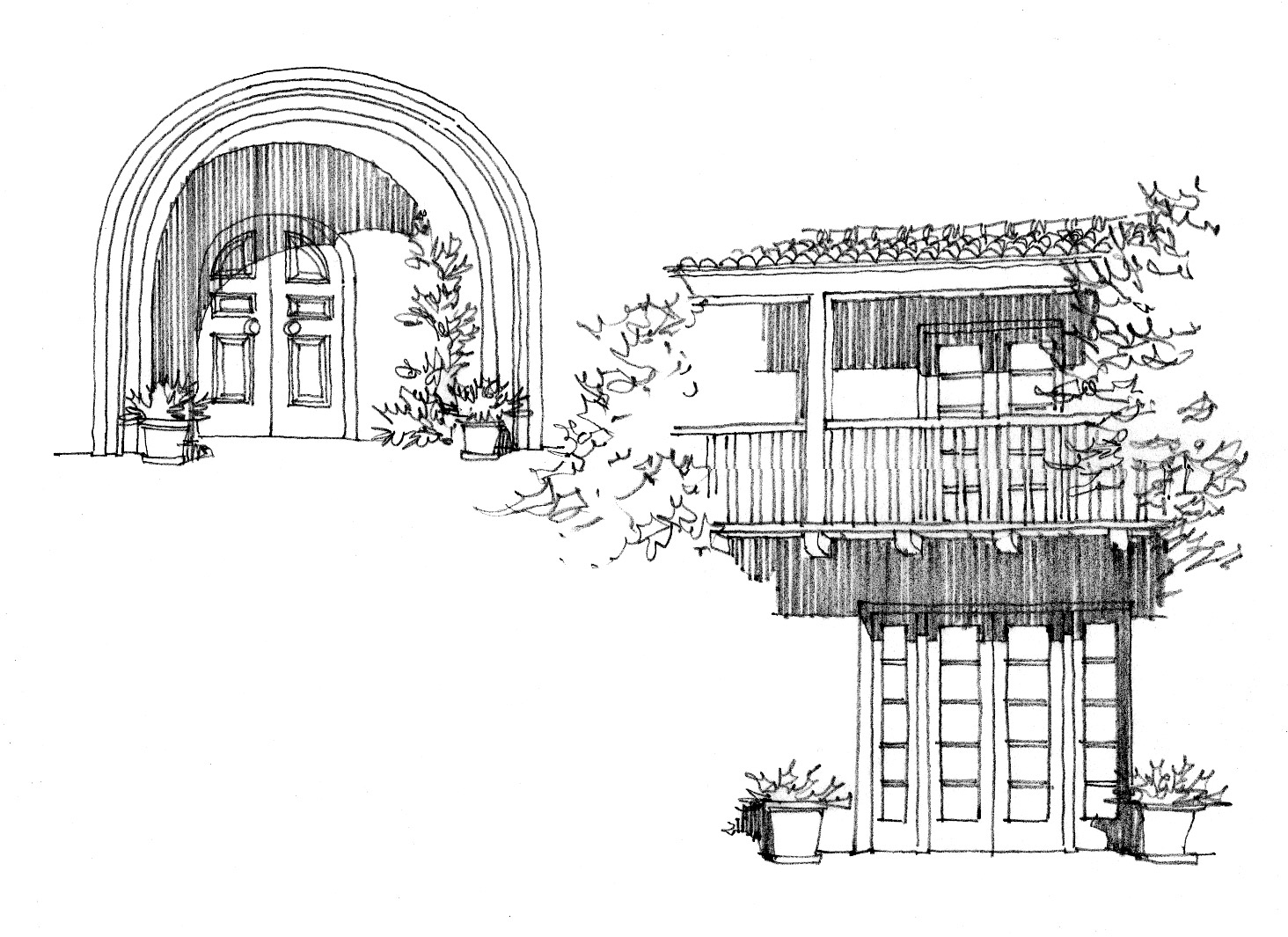
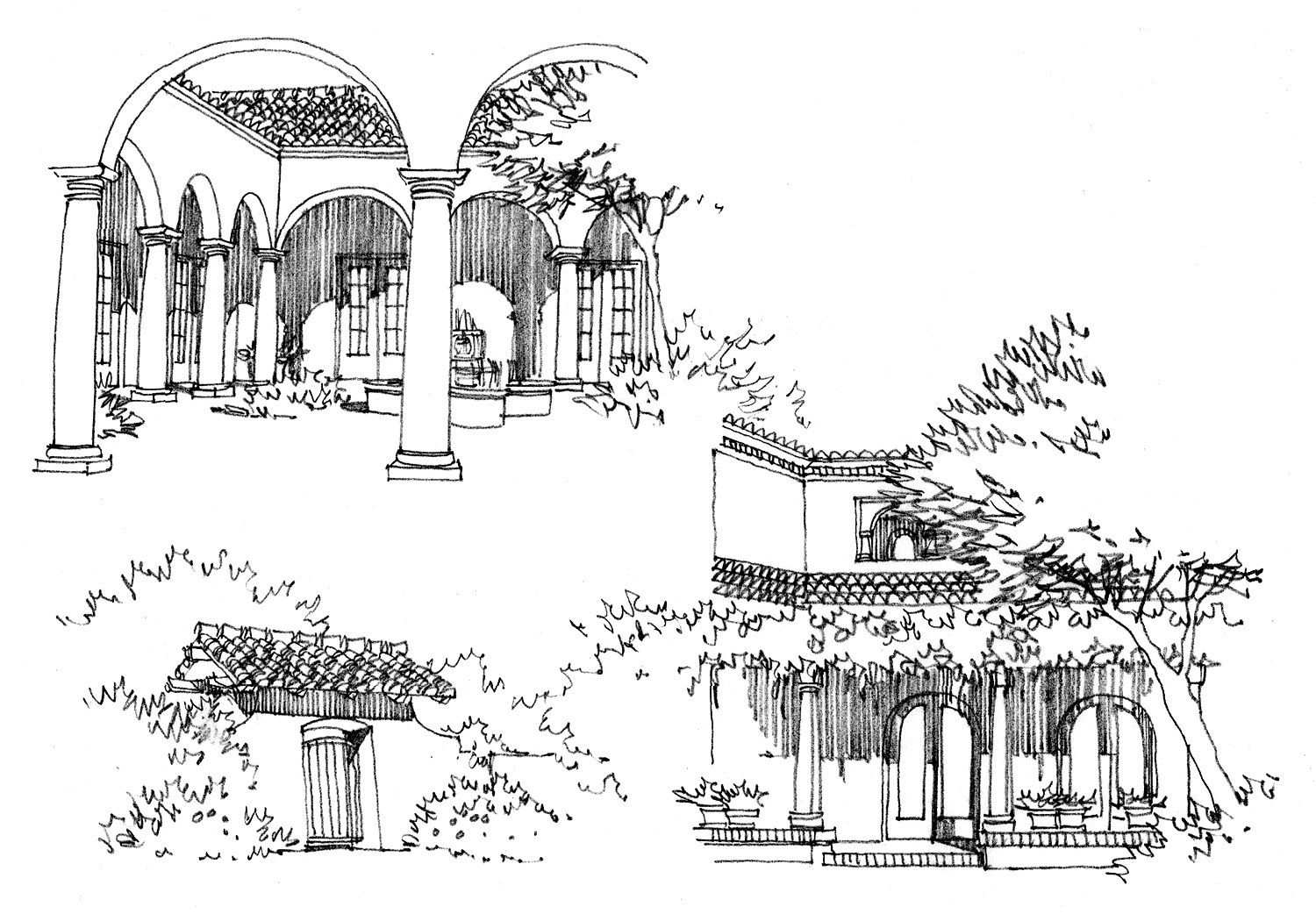
The Spanish Ecclectic style of architecture embodies the characteristics of many related styles: Spanish, Monterey and the early southern California interpretations by Wallace Neff and Lillian Rice. These styles particularly relate to the adjacent areas of Rancho Santa Fe and the desired quality of a prestigious estate development. The plans of these styles are most often informally organized, often around a courtyard. They consist of simple, strong one and two story volumes with 4:12 pitch roofs. Walls are typically stucco, with little or no texture, creating forms with larger and smaller parts assembled in an informal massing. There is limited use of arches. Windows and doors are wood, deeply inset, with vertical proportions. Major openings are accented with raised or moulded surrounds. Dark stained wooden beams are often used as accents.
The landscape design philosophy of The Bridges at Rancho Santa Fe is to develop the feel and the look of “timeless” landscape design that complements the authentic and unique lifestyle of the country/estate living, represented by the Italian Country, Country French, and Spanish Ecclectic architectural styles. The landscape should be considered as an integral and indigenous part of the building architecture, and should provide an instant “mature” landscape setting. Plants provide another dimension to the homesite’s architecture and are useful for augmenting and solving architectural and environmental conditions. Trees enhance views by creating a soft framework for viewing. Trees and shrubs mitigate extreme climatic features, including sun, wind and noise. Lawns provide cool and refreshing surfaces for both passive viewing and active use and recreation. Planting design and selection of types of plant material will vary with individual tastes.
These Guidelines are not meant to limit sensitive creativity; however, the Committee encourages a simple, straight-forward and natural approach that organizes and uses plants for a purpose. Although the microclimate of The Bridges is ideal, allowing a great number of choices of plant materials, the landscape design must reflect and be indigenous to the defined architectural styles permitted within The Bridges.
Owners who do not commence construction of a residence and landscaping for an extended period after close of escrow of one-year or more, will be required to install homesite landscaping in conformance with unimproved homesite landscape standards, described below.
Portions of some homesites are designated as “Slope Maintenance Areas”, which may include natural vegetation with open space easements in favor of San Diego County. The existing natural areas of The Bridges are vital to the overall character of this rural, countryside development, and must be preserved and retained. The homesite Owner may not encroach into these spaces, or damage or remove any plantings from these areas without the express written approval of the County Fire Marshall, other Local Governmental Agency or the Committee. Any adjustments, adaptations, modifications, or changes in any way to these existing and/or natural landscape areas will be considered a serious violation, if not so expressly approved.
In the event of any violation, the Committee may require that the affected area be restored to its original state, or may require the homesite Owner to replace the damaged or destroyed landscape with either similar plant sizes and types or with other plantings, as deemed appropriate by the Committee.
All plantings must be compatible and complimentary to the general theme and character of The Bridges, with special emphasis given to landscape areas adjacent to the golf course and to the community roadways. Plant materials should be rich in texture and color, but avoiding extreme or high contrast between adjacent plantings or with native vegetation.
Evergreen or native trees are required when adjacent to natural open space and along streetsides. Trees should be clustered and naturally spaced rather than planted in thin rows or in rigid patterns.
Trees should be limited in varieties to create a simplified, natural theme. Large “mature” specimen trees must be planted to instantly soften the scale of the structures, especially at large, blank walls and tall structured elements. Perimeter and slope plantings should be appropriate to The Bridges microclimate and the principles of water conservation and low fire fuel capacity.
The homesite Owner must provide water and maintenance for his/her property. No homesite’s landscape may be changed, revised, or removed without the approval of the Committee. Plantings should be compatible, sensitive, and responsive to neighboring homesites, and respect its integration into The Bridges overall theme. No particular planting style should contrast highly or stand out from the other homesites when viewed from the street or the golf course.
Any modification, regrading or encroachment onto any slope must be submitted to the Committee for evaluation and approval. The homesite Owner is responsible for all processing, fees, permits and approvals required by the County and any other governing agency.
All proposed modifications, regrading, or encroachment onto the Slope Maintenance Areas of a homesite by the Owner must be submitted to both the Golf Course Manager and the Committee for review and approval. All approved modifications to such slope planting and irrigation will be installed by the Golf Course and back-charged to the homesite Owner, unless otherwise specifically approved by both the Manager and the Committee. All changes to grading must be independently engineered, and the homesite Owner is responsible for all processing, fees, permits and approvals required by the County and any other Local Governmental Agency.
No modifications to open space areas will be considered, other than for brush management and fire fuel control where required and approved in writing by the Fire Marshall or any Local Governmental Agency.
Each homesite Owner is responsible for providing full and complete irrigation coverage to all plant materials on the homesite, excluding Slope Maintenance Areas. The irrigation systems are to be valved and controlled for the different environmental conditions of the site and by general type of plant and slope gradient.
Irrigation systems are to be designed and maintained so that streets and public areas do not receive runoff, excess surface water or overspray. The systems are to be scheduled for deep watering that penetrates into the root zones. Frequent, light watering is to be avoided.
Soil erosion is not only an aesthetic concern, but also a structural concern. Individual homesites must guard against the erosion caused by both natural and irrigation runoff. All exposed soils must be fully planted and irrigated to eliminate runoff and erosion. The homesite Owner must take special precautions when highly erosive soils are encountered, and must provide additional erosion control materials and avoid over-watering and concentrating water flows that cause or contribute to erosion. All structural erosion damage to slopes, other than Slope Maintenance Areas under the control of the Golf Course, must be repaired under the direction and observation of a Geotechnical or Civil Engineer.
Minor surface erosion must also be repaired, and these areas replanted as directed by a Landscape Architect.
The design and maintainence of positive surface flow of storm and residual water, as well as its collection and disposal, are critical to the success of the homesite and its landscape. Excessive water and subsurface moisture must be kept away from buildings and slopes to avoid structural damage. Surface water must also be kept from concentrating on slopes with concentrated flows onto neighboring sites. All drainage structures, piping and swales should be inspected and checked annually for proper flow by the Owner. Failure to maintain proper drainage could result in structural damage to the soils supporting the buildings and to slopes. Provide cobblestone drainage swale at street edge to eliminate surface erosion along curb on sloped street lots.
To provide instant scale and maturity to each homesite, large “mature” trees and plantings are required at the initial planting of the homesite. A minimum of five (5) mature evergreen trees, measuring a minimum of sixteen (16) feet high with a minimum spread of twelve (12) feet, will be required on both the street side(s) and the golf course side(s) of each residence to screen and soften the mass of the buildings. These trees are to be planted at no more than seventy-five (75) feet apart, and must be within thirty (30) feet of the home. When trees are multi-trunk or low branching, trees must be fourteen (14) feet minimum height with a twelve (12) foot minimum spread. Of the five (5) required trees, two (2) may be large scale deciduous trees (specified from list on page 30).
Large shrubs or plants with a minimum container size of fifteen(15) gallon must also be planted near or adjacent to the house and garage on the street and golf course sides to effect instant foundation plantings and to scale down the building masses.
All designs and installations are subject to the approvals of the Committee, which reserves the right to refuse, adjust, increase and/or relocate any plant material, at its sole discretion to meet the intent of these Guidelines.
The use of planting as screening or barriers is encouraged as opposed to constructing fencing or walls, to create a natural, countryside appearance. However, these screens or barriers should not be rigidly defined or extensively planted at perimeter or property line areas so as to be detrimental to the open, natural character of The Bridges. Three (3) feet minimum wide planting areas are required along all property lines.
Plant screening should be provided to hide service areas, large paving areas, and garage doors. Plants used for screening should be evergreen varieties.
The use of boulders and natural rock formations may be approved if integrally designed into the landscape theme of the homesite.
However, the boulder and rock design and placement must be a minor element within the overall site design, and should not dominate the architectural theme.
When boulders or rocks are used, they must be placed and set in natural arrangements, with the boulders set horizontally and imbedded a minimum of one-third into the ground. They must be naturally clustered and not “lined up” or evenly scattered. The color of the boulders and rocks must match the color of the boulders native to The Bridges’ site. Broken or damaged surfaces of boulders may not be exposed to view. Artificial or man-made rock or boulders may be approved by the Committee, as it may deem fit, under special circumstances or conditions.
Gravel, stone, pebble, decomposed granite, and similar inert ground surfacing materials will be limited in their use. These materials should not be used in such quantities as to dominate any one area of the landscape. When used, however, they must be similar in color and appearance to the native, indigenous materials and ground surfaces of The Bridges. Mow strips and curbs must be colored concrete, brick, stone or similar. Wood headers are not acceptable. Concrete mow strips must have control joints or score lines at a maximum 24” on center.
Other natural landscape surface materials, such as bark chips, shredded bark, and similar mulch materials, are helpful in weed control, water transportation, and visual appeal and are encouraged.
Each homesite must be naturally contoured to compliment the existing hillsides of The Bridges. Contouring will consist of mounding, berming or contouring of soils on the landscape areas and must be made to look natural and in scale with each homesite. No sharp or abrupt slope tops and toes of banks will be permitted. Small scale, bumpy mounds will also not be permitted. Each homesite Owner must submit a fully contoured grading plan that shows the complete intent of the proposed fine grading for review and approval.
In addition to the requirements listed in Section III, above, the homesite Owner is encouraged to provide a well designed landscape lighting scheme that enhances the homesite at night within the limitations of the County “Dark Sky” ordinance and provisions of the Master Declaration. The goal is to maintain a rural, countryside project with minimal visual impact during both nighttime and daytime hours. Lighting should be soft and non-glaring. Fixtures should be hidden from view as much as possible. Landscape lighting must not be directed at or “spill” onto adjacent homesites, the street, golfcourse, or open spaces. Lighting fixtures should be adequately shielded or have shielding that ensures that light sources and lamps are not visible from neighboring sites.
No floodlights, other than approved intermittent guard lighting, will be permitted. Guard lighting fixtures are to be hidden from view or integrated into the building’s architecture. Each homesite entry monument and address should be adequately illuminated by a ground-mounted fixture. All light fixtures in lawn areas and in low groundcover areas must be recessed well lights with grate covers.
The intent of this section is not to discourage sensitive and noteworthy site sculpture and artwork in appropriate areas of the site. Any exterior sculpture or artwork must be hidden from all public views and the golf course.
The homesite Owner is solely responsible for the landscape maintenance of his/her property and its improvements. The landscape planting on each site must be maintained; for there is no such thing as “maintenance free” plants or landscaping. Actually, many plants will require extensive maintenance. Plantings of lawns, shrubs and flower gardens will require more maintenance than many types of groundcovers and larger trees. However, new plantings will require a high degree of attention within the first few years after planting. The homesite Owner should institute a complete program upon initial installation of the planting. A good program will insure vigorous, healthy growth, visually pleasing planting, wise use of water, and the reduction and prevention of plant loss and unsightly plants.
Homesites which remain unimproved, without the commencement of a residence, for an extended period of time after the Close of Escrow from Declarant or a merchant Builder, may have a negative impact on the character of the community. Therefore, each Owner is required not later than one (1) year after such Close of Escrow, if they have not commenced the construction of a residence by such date, to install and maintain irrigated landscaping on the unimproved homesite in conformance with the landscape standards described below, and all other design review provisions of these Guidelines. However, Owner’s obligation to landscape shall be automatically extended to the date which is one (1) year after the date of issuance of the first Certificate of Occupancy by San Diego County for a residence on any homesite which shares a common boundary with the Owner’s homesite.
All Unimproved homesites, as defined above, shall be fully planted, irrigated and maintained by the homesite Owner in accordance with the following requirements:
| Cinnamomum camphora | “Camphor Tree” |
| Cupaniopsis anacardioides | “Carrotwood” |
| Ficus varieties | “Fig Tree” |
| Pinus varieties | “Pine” |
| Podocarous gracilior | “Fern Pine” |
| Olea europea | “Olive” (fruitless) |
| Quercus species | “Oak” |
If the homesite Owner does not provide the required and necessary landscape installation and maintenance as required above, the Master Association may provide such materials, work and labor as necessary and shall charge the cost to supply such material and equipment and to perform such labor or work to the homesite Owner.
The following includes a list of suggested plants that would be suitable for planting at The Bridges. These plants have been chosen as compatible to microclimate, general soil type, and specific architectural themes proposed for this project. The Rancho Santa Fe Fire Department will review trees on a case by case basis.
Acceptable trees within 30 feet of, but 10 feet minimum away from structures:
| Evergreen | |
|---|---|
| Cinnamomum camphora | “Camphor Tree” |
| Cupaniopsis anacardioides | “Carrotwood” |
| Ficus varieties | “Fig Tree” |
| Magnolia grandiflora | “Magnolia” |
| Metrosideros excelsus | “New Zealand Christmas Tree” |
| Olea europaea | “Olive Tree” |
| Podocarous gracilior | “Fern Pine” |
| Quercus agrifolia | “Coast Live Oak” |
| Quercus suber | “Cork Oak” |
| Ulmus Sempervirens | “Elm Tree” |
| Deciduous | |
|---|---|
| Alnus species | “Alder” |
| Jacaranda mimosifolia | “Jacaranda” |
| Liquidamber styraciflua | “Sweet Gum” |
| Platanus racemosa | “California Sycamore” |
| Platanus acerifolia Bloodgood | “Plane Tree” |
| Pyrus varieties | “Pear Tree” |
| Tipuana tipu | “Tipu Tree” |
| Ulmus Sempervirens | “Elm Tree” |
Additional acceptable trees when canopies are 30 feet away from structures:
| Evergreen | |
|---|---|
| Melaleuca quinquenervia | “Cajeput Tree” |
| Pinus species | “Pine” |
| Pittosporum undulatum | “Victorian Box” |
| Quercus ilex | “Holly Oak” |
| Schinus molle | “California Pepper” |
| Schinus terebinthifolius | “Brazilian Pepper” |
| Deciduous | |
|---|---|
| Koelreuteria bipinnata | “Chinese Flame Tree” |
| Populus n. ‘Italica’ | “Lombardy Poplar” |
| Populus candicans | “Balm of Gilead” |
| Salix babylonica | “Weeping Willow” |
Theme Shrubs (50% of shrubs are to be following species):
| Buxus species | “Boxwood” |
| Camellia species | “Camellia” |
| Euryops p. ‘Viridis’ | “Green-n-Gold” |
| Feijoa sellowiana | “Pineapple Guava” |
| Gardenia species | “Gardenia” |
| Ligustrum j. Texanum | “Texas Privet” |
| Pittosporum species | “Tobira” |
| Raphiolepis species | “Hawthorn” |
| Viburnum suspensum | “Sandankwa” |
Theme Vines (50% of vines are to be following species):
| Bougainvillea species | “Bougainvillea” |
| Clytostoma callistegioides | “Violet Trumpet Vine” |
| Distictis species | “Trumpet Vine” |
| Hibbertia scandens | “Guinea Gold Vine” |
| Trachelosperma jasminoides | “Star Jasmine” |
Additional Plants (following are additional plants that will be considered favorably if planted in acceptable locations and properly scaled spaces):
| Trees | |
|---|---|
| Bauhinia species | “Orchid Tree” |
| Betula species | “Birch” |
| Callistemon viminalis | “Weeping Bottlebrush” |
| Cassia leptophylla | “Gold Medallion Tree” |
| Citrus Species | “Citrus” |
| Cupaniopsis anacardioides | “Carrotwood” |
| Ficus species | “Fig Tree” |
| Jacaranda mimosifolia | “Jacaranda” |
| Koelreuteria species | “Goldenrain Tree” |
| Lagerstroemia indica | “Crepe Myrtle” |
| Liguidambar stryraciflua | “Sweet Gum” |
| Magnolia grandiflora | “Magnolia” |
| Melaleuca nesophila | |
| Melaleuca quinquenervia | |
| Myoporum laetum | |
| Olea europaea varieties | |
| Pittosporum undulatum | “Victorian Box” |
| Podocarpus gracilior | “Fern Pine” |
| Populus n. ‘Italica’ | “Lombardy Poplar” |
| Prunus species | “Flowering Plum” |
| Pyrus species | “Pear Tree” |
| Shrubs | |
|---|---|
| Acacia redolens | |
| Agapanthus species | “Lily of the Nile” |
| Arbutus unedo | “Strawberry Tree” |
| Azalea species | “Azalea” |
| Begonia richmondensis | “Richmond Begonia” |
| Calliandra inaequilatera | |
| Ceanothus g. ‘horizontalis’ | |
| Cistus purpureus | |
| Cistus salviifolius | |
| Echium fastuosum | “Pride of Madiera” |
| Escallonia species | “Escallonia” |
| Grevillea noellii | |
| Heteromeles ambutifolia | “Toyon” |
| Hemerocallis hybrida | “Daylily” |
| Hibiscus species | “Hibiscus” |
| Ilex species | “Holly” |
| Impatiens wallerana | “Busy Lizzie” |
| Lantanta species | “Lantana” |
| Lavandula species | “Lavender” |
| Leptospermum scoparium | |
| Limonium perezii | |
| Myrsine africana | “African Boxwood” |
| Nerium oleander | “Oleander” |
| Pelargonium peltatum | “Ivy Geranium” |
| Photinia fraseri | “Fraser’s Photinia” |
| Rhus integrifolia | “Lemonadeberry” |
| Rhus Ovata | |
| Rosa hybrids | “Rose Bush” |
| Rumohra adiantiformis | “Leatherleaf Fern” |
| Tecomaria capensis | “Cape Honeysuckle” |
| Trachelospermum jasminoides | “Star Jasmine” |
| Vines | |
|---|---|
| Ficus repens | “Creeping Fig Vine” |
| Gelsemium sempervirens | “Carolina Jessamine” |
| Solanum jasminoides | “Potato Vine” |
| Wisteria species | “Wisteria” |
| Groundcovers | |
|---|---|
| Hedera helix varieties | “Ivy” |
| Lantana montevidensis | “Trailing Lantana” |
| Lonicera japonica 'Halliana' | “Hall’s Honeysuckle” |
| Lysimachia nummularia | “Moneywort” |
| Myoporum Pacificum | |
| Myoporum species | “Prostrate Myoporum” |
| Rosmarius officinalis ’Irene’ | “Irene’s Prostrate Rosemary” |
| Sollya heterophylla | “Austrailian Bluebell” |
| Soleirolia soleirolii | “Baby’s Tears” |
| Trachelospermum jasminoides | “Star Jasmine” |
| Turf lawns | “Lawn” |
No plant material substitutions shall be made without prior approval from the Design Review Committee.
In fire zones, all plant material shall be selected from the San Diego Fire Chief’s Wildland/Urban (WUI) Development Standards Plant List, unless approved by the Rancho Santa Fe Fire Department on a case by case situation.
Maintenance of ornamental landscaped areas, as well as existing vegetation, is the responsibility of the homeowner. Maintenance includes, but is not limited to, replacement of dead or dying plant material, maintenance of vertical clearances of tree and shrubs as defined in the San Diego Fire Chief’s Association Wildland/Urban Development Standard and maintenance of operational integrity and programming of the irrigation system(s), if any.
The following are plants that are specifically prohibited from use at The Bridges, because of their intrusiveness or potentially destructive growth characteristics or invasiveness, or because of profuse and noxious pollen, weed-like character, susceptibility to pests and diseases, excessive re-seeding, aggressive or invasive root system, short life span, or fire fuel capacities:
| Prohibited Plants | |
|---|---|
| Acacia baileyana | “Bailey Acacia” |
| Coprosma species* | “Coprosma” |
| Cortaderia selloana | “Pampas Grass” |
| Cynodon dactylon | “Common Bermuda Grass” |
| Eriogonum species | “Buckwheat” |
| Eucalyptus species | “Gum Tree” |
| Grevillea robusta | “Silk Oak” |
| Hedera canariensis* | “Algerian Ivy” |
| Ice plants* | “Ice Plants” |
| Pennisetum species | “Fountain Grass” |
| Phormium species** | “New Zealand Flax” |
| Pinus species | “Pine Tree” |
| Sequoia sempervirens | “Coast Redwood” |
| Thuja species | “Arborvitae” |
| Tulbaghia violacea* | “Society Garlic” |
*May be allowed in non-public viewed areas.
**Dwarf varieties may be allowed.
Safe and effective handling of water runoff is a prime concern since it affects adjacent properties as well as the storm drain systems. Because of this concern, site plans will be reviewed to see that drainage designs have adequately protected adjacent properties from water and erosion run off from each homesite.
Each Owner is responsible for showing how surface run off will be handled by means of underground piping, berms, ditches and catch basins, or a combination of the above. Size and placement of riprap and other devices used for disbursement of water will be checked for adequacy. Coring of street curbs is not permitted for any reason.
Stormwater from each homesite shall not drain across side or rear property lines onto adjacent residential lots. All drainage routed to the rear of a homesite or onto the golf course shall utilize energy dissipaters or other approved methods. Drainage will be permitted to exit onto streets only if such drainage pattern was originally approved by the County of San Diego.
Grading and drainage information, indicating conceptual intent, must be submitted for Design Development Plan review. A precise grading and drainage plan with details must be submitted for Final Design review. After Final Design approval, each homesite may be reviewed during the construction process to verify that the drainage systems are being installed per approved plans.
Any deviations from the approved plans during the construction phase must be submitted to the Committee for review and approval.
Grading and drainage plans which require a permit by the County of San Diego must be designed and wet stamped by a licensed Civil Engineer (minimum scale 1” = 10’-0”). Sites not requiring a grading permit may have the grading plan designed and stamped by a Landscape Architect; however, a drainage compliance certificate (Exhibit B, page 46) signed by a licensed Civil Engineer must be provided.
The Committee has established certain construction and safety conditions that will apply to all builders, contractors and service personnel entering The Bridges at Rancho Sante Fe community. They are intended to encourage safe, neat and orderly activities for construction and maintenance.
Each homesite under construction must have a current Construction Guard Information Form on file with the Manager of the Master Association. This form is to be completed by the contractor in charge of the job. This form must have telephone numbers to reach the contractor or his/her office and the names of all subcontractors working on the project. Contractor Entry Forms are to be updated every thirty days.
The Owner or general contractor is required to have an on-site construction representative with the authority to receive deliveries and direct suppliers and subcontractors on a full time basis.
All contractor and service personnel are required to enter and leave through the guard gate. Hour of entry is 7:45 a.m. and exiting time is 5:30 p.m. or dusk on Monday through Friday. Hours of work are between 8:00 a.m. and 5:30 p.m. or dusk. Monday through Friday.
No construction activity other than emergency repairs will be permitted on weekends, legal holidays, or before or after approved work hours in accordance with the Master Association’s holiday schedule.
No vehicles (trucks, vans, cars, etc.) may be left in the subdivision overnight. Approved construction equipment may be left on the homesite while needed, but must not be kept on the street.
When construction work requires the use of adjoining property for any purpose, such as temporary storage or transporting labor or materials for the work, the applicant shall obtain written permission from the adjoining property Owner (including the Declarant, if the adjoining property is so owned). A copy of the letter granting permission must be filed with the Master Association Manager prior to commencement of construction or prior to encroachment.
Any Owner or contractor who desires to bring a construction trailer, field office or the like to The Bridges at Rancho Santa Fe must first obtain written approval from the Committee. Such temporary structures are to be located only in approved locations and must be removed upon completion of construction.
Each Owner and contractor is responsible for providing adequate sanitary facilities for his/her construction workers. Portable toilets or similar temporary toilet facilities are to be located only on the construction site, and shall be serviced weekly.
Construction crews will not park on or otherwise use other lots or the open space areas. Private and construction vehicles will be parked only on the construction site or adjacent streets, without obstructing free flow of traffic.
Owners and contractors are permitted to store construction materials and equipment on the construction site during the construction period. It must be neatly stacked, properly covered and secured. All storage of materials or equipment is the responsibility of the Owner.
Damage and scarring to any real or personal property, including but not limited to other homesites, open space, streets, sidewalks, landscaping, irrigation, driveways and/or other Improvements will not be permitted. If any such damage occurs, it will be repaired and/or restored promptly at the expense of the Owner. If not repaired, the Master Association will use the construction deposit of the Owner to repair this damage.
Upon completion of construction, each Owner and contractor must clean the construction site and repair all property which was damaged, including but not limited to restoring grades, planting grass and trees approved by the DRC, and repair of streets, driveways, pathways, drains, culverts, ditches, signs, lighting, fences and any other damaged Improvements. Failure to comply with these requirements will result in the Owner being charged all costs by Master Association to correct the damage.
Operators of vehicles are forbidden from spilling substances while within The Bridges at Rancho Santa Fe. If spillage occurs, the homesite Owner is responsible for cleaning up immediately. Any spills must be reported as soon as possible to the Master Association Manager.
Washing out of concrete delivery trucks must occur only on the Owner’s construction site. There will be no washing of any trucks or other equipment on the streets, in open space areas or on any other homesite.
Before trenching, check location of underground utilities. If any telephone, cable TV, electrical, water, irrigation etc. line is cut or damaged, it is the responsibility of the Owner or the contractor to report such accident to the Master Association Manager within 30 minutes.
All additions or alterations affecting the finished grade of the site, exterior appearance of any structure, or landscaping will require approval of the Design Review Committee. The Committee should be contacted to determine if additional submittals will be required.
Loud radios or unnecessary noise will not be allowed within the community. This is distracting and discomforting to property Owners and golfers.
During the construction period, each construction site and adjacent streets shall be kept neat and shall be properly policed to prevent them from becoming a public eyesore, affecting other lots and the open space.
Owner and contractors shall clean up all trash and debris on the construction site at the end of each day. This includes gravel, sand, cement, nails, glass, etc.
A trash container shall be located on each building site at all times for containment of lightweight materials, packaging or other trash materials which may blow off the site. Trash and debris shall be removed from each construction site at least once a week, by every Friday, to an approved dumping site located off the project. Owners and contractors are prohibited from dumping, burying, or burning trash anywhere in The Bridges at Rancho Santa Fe.
Dirt, mud or debris resulting from activity on each construction site must be promptly removed from public or private strees, open space and driveways.
Failure to comply will result in notification after which the Master Association will have the area involved cleaned and their costs will be assessed to the Property Owner.
Alcoholic beverages and drugs are strictly forbidden during construction and maintenance periods.
Contractor advertising signs shall be limited to two signs maximum only naming the General Contractor, Architect or Landscape Architect. Maximum allowable size for each shall be 24” x 24”. A combined 48” x 48” sign is not allowed.
The following are requirements for construction deposit release by the Master Association:
Approved by Declarant on September 14, 2001. Adopted by the Board of Directors on September 17, 2001.
This Second Amendment amends the Community Design Guidelines for The Bridges at Rancho Santa Fe adopted by the Board of Directors of The Bridges Community Association on February 25, 1999, as amended (“Guidelines”). Except as amended below, all other provisions of the Guidelines shall remain in full effect.
This Second Amendment amends the Guidelines by supplementing them with additional standards applicable to the review of the site planning, architectural design and landscaping plans for Improvements to only the homes in The Villas at The Bridges, in recognition of the unique quality of these homes. To the extent the provisions of this Second Amendment are in conflict with the Guidelines, this Second Amendment shall control. The section and paragraph headings in this Second Amendment correspond with those found in the Guidelines. This Second Amendment provides standards for architectural, landscaping and other Improvements planned by Owners to their existing homes, and does not apply to those Improvements constructed or installed prior to an Owner’s close of escrow.
SECTION II – DESIGN REVIEW PROCEDURE AND SUBMITTAL REQUIREMENTS
Submittal and Review Procedure
In addition to the requirements set forth in the Guidelines, the following information shall be required for all Improvements proposed in The Villas:
Both proposed and existing Improvements must be identified (when appropriate) on the Architectural Site Plan, Grading and Drainage
Plan, Floor Plan, Exterior Elevation Drawings, Roof Plan and Conceptual Landscape Plan.
If backyard landscaping and irrigation have not been installed prior to an Owner’s close of escrow, complete plans and specifications for such Improvements must be submitted to the DRC no later than sixty (60) days after such Owner’s close of escrow. An Owner must complete all installation of such landscaping and irrigation Improvements within 120 days after the DRC’s Final Design Plan approval, unless an extension is approved in writing by the DRC. Construction of all other Improvements to a homesite must be completed within six (6) months after the DRC’s Final Design Plan approval, unless an extension is approved in writing by the DRC.
SECTION III – SITE DEVELOPMENT CRITERIA
Solar equipment is not recommended for roof surfaces or yards in The Villas, and will be permitted only to the extent required by applicable law and approved by the Design Review Committee.
Exterior recreational or play equipment is not approved for yard placement at The Villas.
Attached, detached and portable basketball hoops and backboards are not approved for The Villas.
SECTION V - LANDSCAPE CHARACTER
Any mature trees or plantings removed or damaged as a result of construction by the Owner shall be replaced with material of the same size and variety. The size of existing plants on a homesite shall be noted on the Architectural Site Plan submitted for any Improvement.
Approved by Declarant on October 18, 2001. Adopted by the Board of Directors on October 18, 2001.
This Third Amendment amends the Community Design Guidelines for The Bridges at Rancho Santa Fe adopted by the Board of Directors of The Bridges Community Association on February 25, 1999, as amended (“Guidelines”). Except as amended below, all other provisions of the Guidelines shall remain in full effect.
This Third Amendment amends the Guidelines by supplementing them with additional standards applicable to the review of the design, site development and grading plans for Improvements to only the homesites in The Grove at The Bridges (Homesites 187 to 197), in recognition of the unique quality of these homesites. To the extent the provisions of this Third Amendment are in conflict with the Guidelines, this Third Amendment shall control. The section and paragraph headings in this Third Amendment correspond with those found in the Guidelines.
SECTION II – DESIGN REVIEW PROCEDURE AND SUBMITTAL REQUIREMENTS
In addition to the items listed in this section of the Guidelines, a Preliminary Plan shall include a Preliminary Grove Maintenance Plan for the homesite showing (i) the number and approximate location of all citrus trees to be retained for Master Association maintenance on the homesite and all trees to be removed from the homesite, and (ii) the location of a ten (10) foot wide easement for Master Association maintenance access purposes over the homesite, from the street to the grove of citrus trees.
In addition to the documents listed in this section of the Guidelines, a Final Grove Maintenance Plan for the homesite shall be submitted for final review after Design Development Plan approval is obtained. The plan must contain at least the same elements as the Preliminary Grove Maintenance Plan, plus the citrus tree irrigation system plan.
SECTION III – SITE DEVELOPMENT CRITERIA
The maximum building height of all improvements shall not exceed twenty eight (28) feet as measured vertically from the proposed improvement to the existing topography directly below.
In addition to the provisions of this section of the Guidelines, pool fencing on slopes facing streets will not be permitted, but may be substituted with retaining walls. The walls can not be over five (5) feet high and may be integrated into the design of zero-edge or negative edge pool structures, subject to compliance with County of San Diego ordinances.
In addition to the provisions of this section of the Guidelines, wherever possible, buildings should be oriented so that driveway access is indirect and garage openings do not directly face the street. From the garage, drives should move toward the street meandering along natural contours of the site and major landscape elements. Long straight driveways are to be avoided in order to maintain a natural appearance. Driveway drainage should incorporate rock-lined ditches and culverts on the uphill side. Driveway and parking area materials close to the home may vary as they relate to individual architecture, but should always maintain a finished quality. Drainage across or under driveways, where required, should be integrated into the design of the drive or apron.
SECTION VI – LOT GRADING AND DRAINAGE
In addition to the provisions of this section of the Guidelines, the following grading and drainage provisions shall apply to The Grove:
The goal of grading at The Grove is to preserve the natural existing topography and citrus grove as much as possible. Declarant's Improvements have been carefully planned to minimize alteration of the existing topography. These goals should be carried through to all levels of development of the individual homesites. Excessive grading of the site should be avoided and is not desirable for sensitive siting of Improvements. Any minor grading that is required should be done so as to maintain the natural existing softness of the terrain, using natural rounded and varied contours, not sharply defined and regular slopes, and saving as many citrus trees as possible.
Drainage swales or washes interrupted by homesite Improvements or additional drainage structures created by such Improvements shall be constructed or reconstructed of natural materials properly placed for positive operation of the drainage system. Structures which are artificial in appearance, such as exposed drainage pipe, must be avoided.
Erosion is to be controlled in all circumstances. Special care must be taken during construction to protect and retain exposed earth. Erosion that occurs to Master Common Areas or golf course Slope Maintenance Areas due to a change in the existing drainage conditions will be the responsibility of the Owner who caused the change.
SECTION VII – GENERAL GUIDELINES FOR CONSTRUCTION
All citrus trees to be retained on the homesite as shown on the approved Final Grove Maintenance Plan shall be completely protected during the construction process and separated from all areas of construction with yellow caution tape, or fencing if necessary. Owners shall be responsible (as a charge against their construction deposit) for the cost of the necessary replacement by the Master Association of any trees that are not approved for removal but are damaged during the construction process.
Citrus trees approved for removal as shown on the Final Grove Maintenance Plan shall be identified and marked prior to commencement of construction. The existing citrus tree irrigation system will be modified by the Master Association at the Owner's expense prior to the commencement of the removal of trees and construction, unless otherwise agreed in writing by the DRC. If any damage occurs to the citrus tree irrigation system during homesite construction, the Owner shall immediately notify the Master Association. The Owner shall be responsible for the cost of any repair by the Master Association. The Owner is also responsible for the cost of replacing any citrus trees that die as a result of damage that occurs to the irrigation system during homesite construction or as a result of any act of Owner.
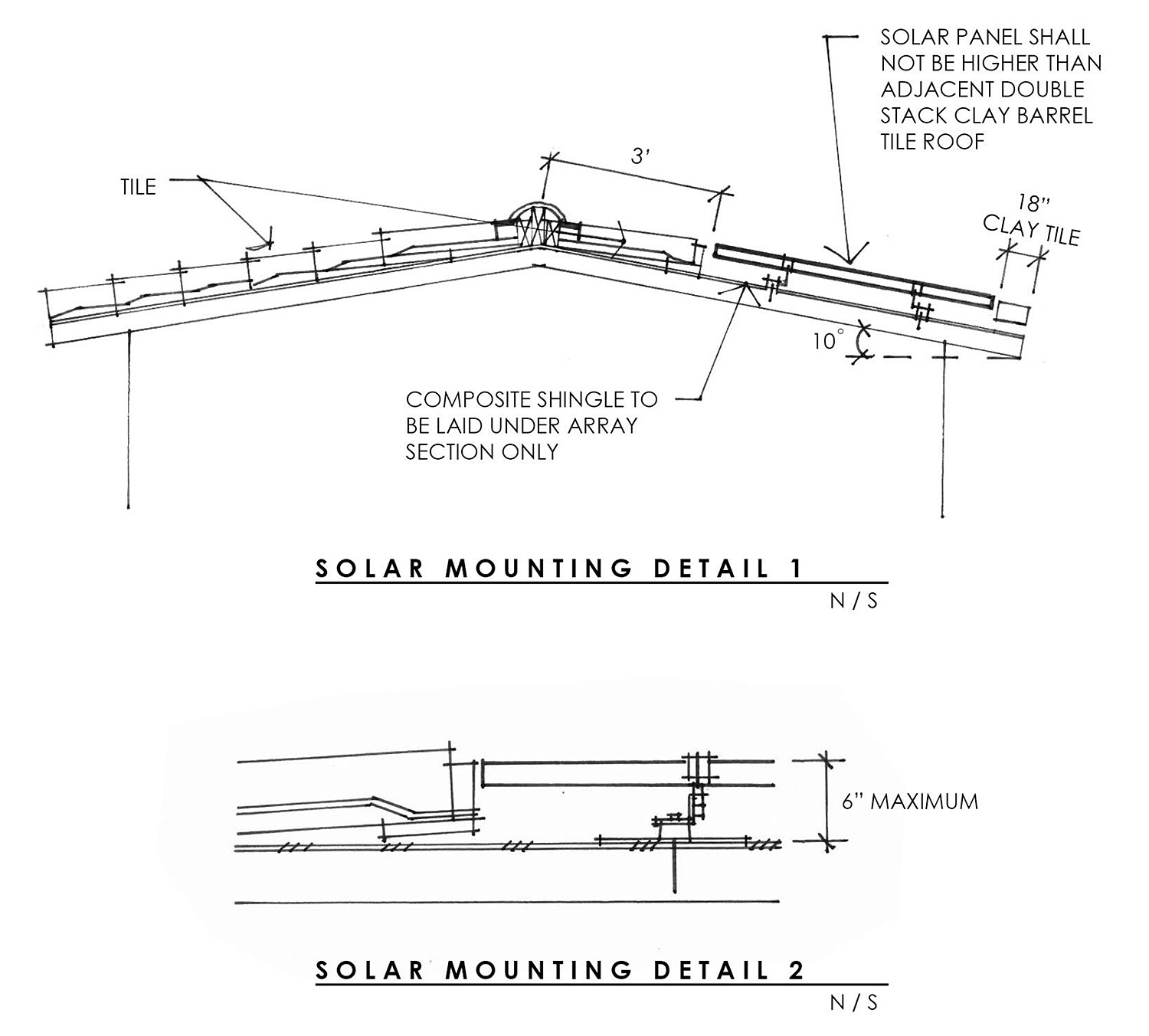
Per California Civil Code Section 714, an association may not prohibit solar energy systems, nor impose restrictions that significantly increase their cost or decrease their efficiency. However, per California Civil Code Section 714.1, an association may impose reasonable restrictions. An Owner shall apply for approval from the Design Review Committee (DRC) for installation of solar and photovoltaic panels. The e. following requirements have been established for installing solar energy systems on your individual Lot:
Provide detailed information about the product and manufacturer and include photographs. Indicate the type of solar panels proposed, whether they are intended to heat water or are to be photovoltaic.
Include information showing that all standards as required by California Civil Code § 714 are met.
The DRC has the right to modify the proposed plans to mitigate the panels being viewed by neighbors or from the street. Changes may include moving panels from one direction to another, or by asking for solar panels that match the roof color. Additional landscaping may also be required to screen any proposed panels. By law, the DRC cannot decrease the performance of the solar system by more than 20%, or cause an increase in cost of more than 20% (or in the case of active solar panels, increase the cost more than $2,000).
However, if an Owner has installed a solar system without approval, he or she may be fined until the application process is followed and the panel location and installation are approved.