
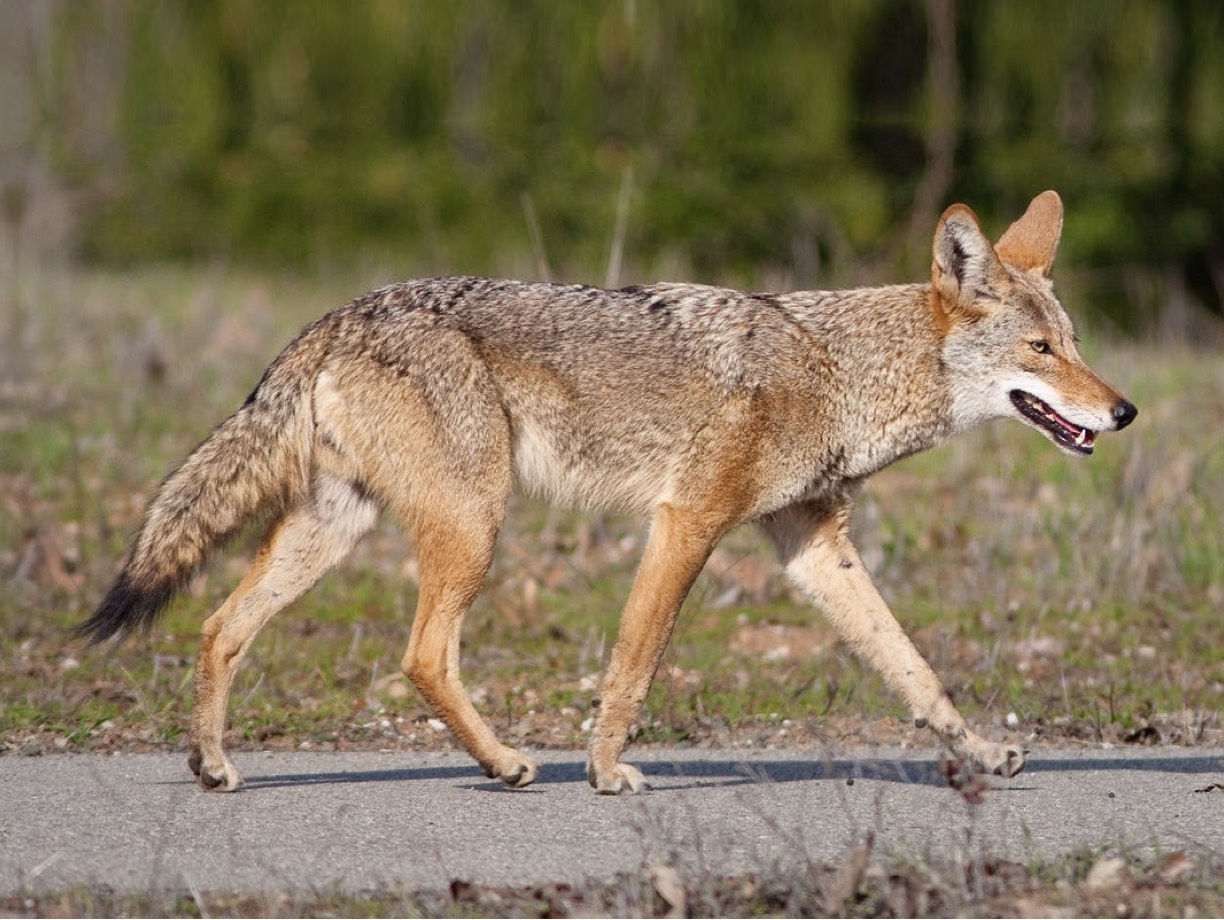
Some residents have expressed concern about coyote sightings. A few residents have lost their pets to these skilled hunters, because they were unaware of recent coyote activity near their homes.
Coyotes breed mainly from January thru March. The young are born between March and May with litter sizes averaging 5-6 pups. Coyotes produce one litter per year. During the time of year when adult coyotes are caring for their young (May through September), they can be very aggressive when their young are threatened. Domestic dogs are especially vulnerable to an attack during this time. Coyotes are most active at night and during the early morning and late evening hours. However, young coyotes tend to be more active during daylight hours than adults.
Though these animals are far from domesticated, they are very comfortable living in close proximity to human beings. They have little fear of man and may be seen trotting a short distance from joggers and walkers. While not normally a danger to human beings, coyotes will display defensive behaviors if threatened. Therefore, it is important to leave a comfortable distance between you and a coyote.
Small pets can easily become coyote prey. Cats and small dogs should not be allowed outside alone, even in a fenced yard. It’s highly recommended that small pets always be accompanied by their owner. Though coyotes generally hunt between sunset and sunrise, they can be observed at all hours of the day and will not pass up the opportunity for an easy meal. A dog or cat left in a backyard can be snatched in a matter of moments. It is not unusual for a coyote to “stalk” a residence for several days observing the routine of their prey before attacking.
Many steps can be taken to protect you and your property from nuisance animals like coyotes and other wildlife. Listed below are some of the steps you can take to minimize encounters and potential conflicts between coyotes and other wildlife including bobcats, raccoons, skunks and mountain lions.
If you encounter an aggressive coyote, you may have gotten too close to its prey or its family. If you feel threatened throw a rock or stick at the coyote. A coyote behaves in a similar way as domestic dogs that are defending their territory and family. Even a fully fenced yard will not keep out a hungry, athletic coyote. These animals are extremely agile and can easily scale any residential fence. Children should be taught to avoid strange animals, whether domestic or non-domestic. When older children are walking through trails or parks, they should be instructed on coyote safety.